 The Coronavirus (“COVID-19”) pandemic has created a public health crisis and has presented many challenges to the United States (“U.S.”) judicial system, such as restricting or ending jury trials, restricting entrance into courthouses, suspending in-person proceedings, and granting extensions for court deadlines. Specifically, within the U.S. immigration system, the immigration courts and immigration process inside the U.S. were affected during the pandemic. The U.S. immigration system’s response to COVID-19 has been a struggle with the attempts to stop the spread of the virus while also maintaining the need to keep operations open.
The immigration courts are part of the Executive Office for Immigration Review (“EOIR”) within the Department of Justice (“DOJ”). In response to the COVID-19 pandemic, on March 15, the EOIR suspended all non-detained Master Calendar hearings nationwide. Days later, the EOIR postponed all non-detained hearings, including individual hearings. Non-detained individuals were the most affected, with their hearings being suspended and creating an immense backlog on the court’s dockets. However, hearings continued for immigrants held in detention centers and unaccompanied children held in shelters by the Refugee Resettlement Office. The continuance of detained individual hearings required detainees to appear via video teleconference, while judges, attorneys, and family members who were witnesses were required to appear in person during the pandemic. Many attorneys opted to appear via telephone, which meant waiving specific objections and electronically filing documents via email. Ultimately, in June 2020, the EOIR began reopening courts across the country, but each immigration court differed in its operational status. EOIR provided updates to which courts reopened nationwide through the operational status map or the DOJ EOIR Twitter page.
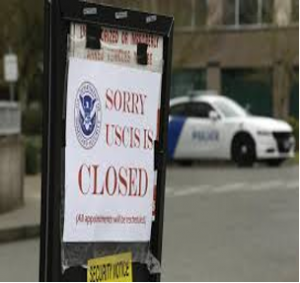
The U.S. Citizenship and Immigration Services (“USCIS”) is a federal agency that conducts citizenship and naturalization, oversees immigration of family members, authorizes work and student visas in the U.S., handles humanitarian programs, asylums, and adoptions. 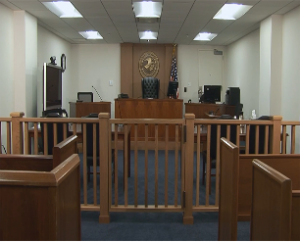 The USCIS temporarily closed its offices to the public from March 18, 2020 until April 1, 2020. This closure meant suspending services at field offices, asylum offices, and Application Support Centers (“ASCs”) in efforts to help slow the spread of COVID-19.
Some immigration processing changes included temporarily suspending premium processing for petitions for nonimmigrant workers and petitions for aliens to work for an employer. Additionally, USCIS allowed an electronically reproduced original signature of applications, petitions, and other documents that required “wet signatures” through the duration of the national emergency of COVID-19. Wet signatures are when the parties are required to physically sign or mark a document and are not allowed to “scan, fax, photocopy, or similarly reproduce the copy of an original document containing an original handwritten signature.” Furthermore, USCIS suspended in-person interviews and would only continue processing applications that did not require any in-person contact. Moreover, USCIS released that the employment authorization extension request will be processed by reusing previously submitted biometrics in response to the pandemic’s ASC closures. Finally, on June 4, 2020, USCIS began reopening non-emergency face to face services in their field offices and asylum offices with several guidelines of social distancing requirements.
Although reopening in many USCIS facilities, asylum offices and immigration courts have begun implementing changes to comply with social distancing requirements. The guidelines for USCIS facilities are that persons may not enter the facility if the person has: (1) had any symptoms of COVID-19, including recently developed cough, fever, difficulty breathing, changes in smell or taste or fatigue (list is not all-inclusive); (2) been in close contact with anyone known or suspected to have COVID-19 in the last 14 days; (3) been instructed to self-quarantine or self-isolate by a health care provider, public health authority or government agency within the last 14 days; or (4) been awaiting the results of a COVID-19 test.
 Additionally, a person entering a USCIS facility may not enter the facility more than 15 minutes before your appointment (30 minutes for naturalization ceremonies). USCIS will provide hand sanitizer at entry points, and face coverings that cover both the mouth and nose are mandatory inside USCIS facilities. USCIS will not allow masks with exhaust valves, neck gaiters or bandanas. If the person entering the USCIS facility does not have an acceptable face covering, USCIS may provide one or ask to reschedule your appointment. Changes to field office appointments include visitor limitation to the applicant, one attorney or authorized representative, and one individual providing disability assistance. Attorneys may choose to attend in person or participate electronically.
At immigration courts that are fully opened to the public, similar social distancing measures were imposed such as: (1) requiring face coverings at all times, (2) entry will be denied if the person entering the building is exhibiting any symptoms or diagnosis, (3) waiting times to enter the buildings and the EOIR space may be longer than usual, and (4) only those required for the hearing would be allowed to enter and the immigration court may also limit entry. Given these points, COVID-19 has greatly affected the U.S. system, but the hope is that these changes are temporary and will allow for operations to continue safely and as efficiently as possible.